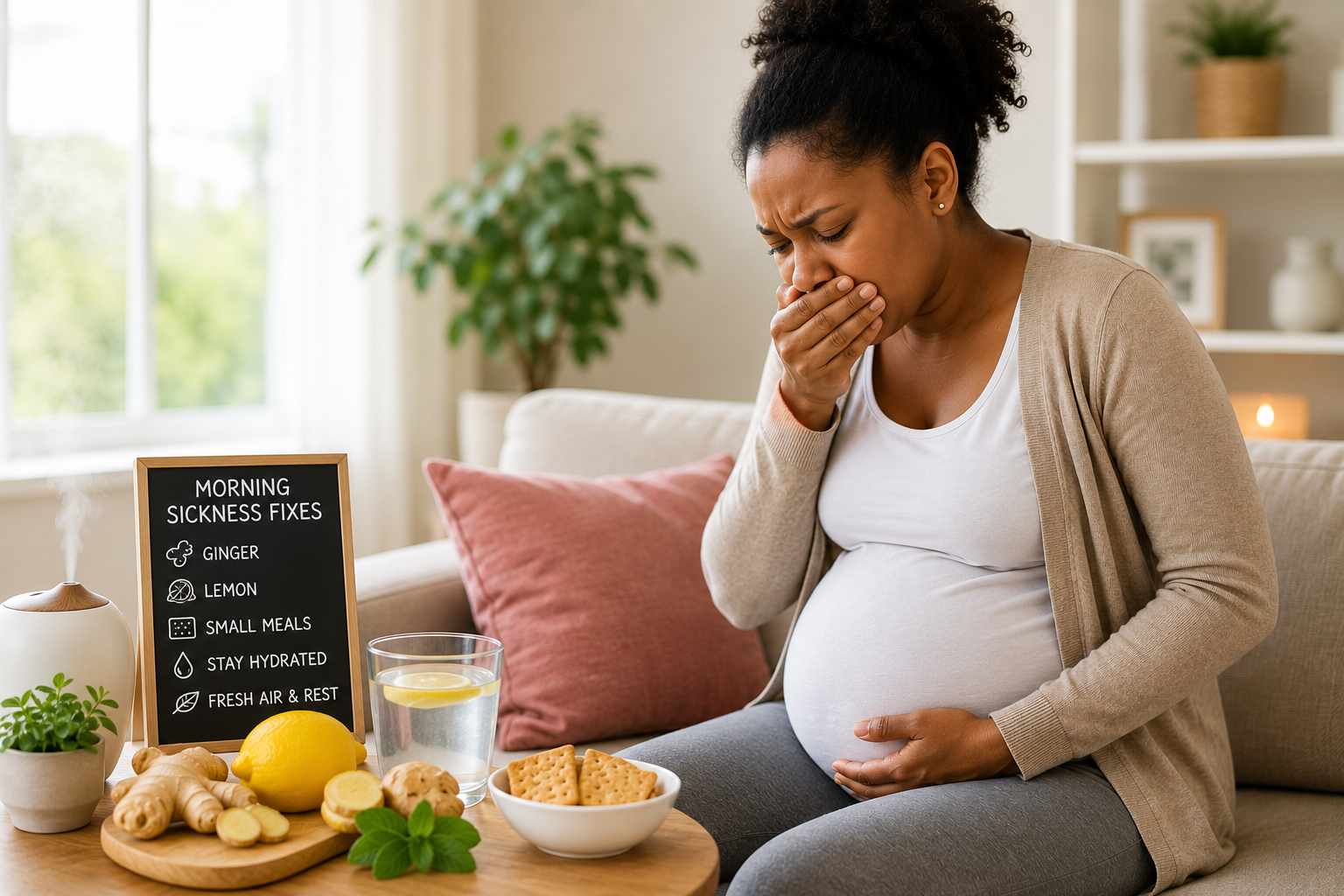
If you’re currently gripping a trash can, surviving on saltines, and wondering when the nausea will finally lift, you’re not alone. Nausea and vomiting of pregnancy (NVP), commonly called “morning sickness,” affects 70–80% of pregnant individuals. Despite the name, it can strike at any hour and range from mild queasiness to debilitating vomiting.
The good news: for most people, symptoms peak between weeks 8–10 and gradually improve by weeks 12–16. Even better, there are numerous evidence-based strategies to help you find relief safely. This guide breaks down what works, what to avoid, and when to seek medical care.
Disclaimer: This article is for educational purposes and does not replace personalized medical advice. Always consult your obstetrician, midwife, or a licensed healthcare provider before starting any supplement, medication, or major dietary change during pregnancy.
Why Does Morning Sickness Happen?
While the exact cause isn’t fully understood, research points to a combination of factors:
- Hormonal surges: Rapidly rising human chorionic gonadotropin (hCG) and estrogen levels strongly correlate with nausea severity.
- Heightened sense of smell: Pregnancy increases olfactory sensitivity, making certain odors trigger nausea reflexes.
- Slowed digestion: Progesterone relaxes smooth muscle, including the gastrointestinal tract, which can cause bloating, reflux, and delayed stomach emptying.
- Evolutionary & genetic factors: Some theories suggest nausea protects the fetus from foodborne pathogens in early development. Family history also plays a role.
Note: The absence of morning sickness does not indicate a problem. Many healthy pregnancies progress with minimal or no nausea.
Evidence-Based Fixes: What Actually Works
Dietary Strategies
Food timing and composition are your first line of defense.
- Eat small, frequent meals: An empty stomach worsens nausea. Aim for 5–6 mini-meals instead of 3 large ones.
- Keep bland carbs nearby: Keep plain crackers, dry toast, pretzels, or rice cakes by your bed. Eat a few before sitting up.
- Pair carbs with protein: Protein stabilizes blood sugar and prolongs fullness. Try apple slices with peanut butter, yogurt with granola, or a hard-boiled egg with crackers.
- Separate food & fluids: Drink 30 minutes before or after meals, not during. Sipping while eating can overfill the stomach and trigger vomiting.
- Hydrate strategically: Cold, clear, or lightly flavored fluids are often easier to tolerate. Try water with lemon, ice chips, diluted juice, or oral rehydration solutions (e.g., Pedialyte).
- Ginger: Multiple studies, including Cochrane reviews, confirm ginger (up to 1,000 mg/day) safely reduces pregnancy nausea. Try ginger tea, chews, capsules, or freshly grated ginger in warm water.

Lifestyle & Natural Approaches
- P6 Acupressure (Neiguan point): Located three finger-widths below the wrist crease on the inner forearm. Applying steady pressure or wearing acupressure wristbands (e.g., Sea-Bands) has been shown in clinical trials to reduce nausea.
- Rest & pacing: Fatigue amplifies nausea. Prioritize naps, delegate chores, and avoid overexertion.
- Ventilate & avoid triggers: Cook with windows open, use exhaust fans, and ask partners to handle strong-smelling foods if possible.
- Optimize prenatal vitamins: Iron and large pill size often trigger nausea. Try taking your vitamin with food, right before bed, or ask your provider about switching to a gummy, chewable, or iron-free formula until nausea improves.
- Fresh air & light movement: A short, gentle walk outdoors can stimulate digestion and distract the nervous system from nausea signals.
Medical Options (Provider-Supervised)
When lifestyle and dietary changes aren’t enough, safe medical treatments are available:
- Vitamin B6 (Pyridoxine): 10–25 mg, 3–4 times daily. First-line, extensively studied, and proven safe in pregnancy.
- B6 + Doxylamine (Diclegis® / Bonjesta®): The only FDA-approved medication specifically for NVP. Combines B6 with an antihistamine that reduces nausea and is safe for fetal development.
- Prescription antiemetics: If first-line treatments fail, providers may discuss ondansetron (Zofran®), promethazine, or metoclopramide. These are used when benefits outweigh risks, after thorough discussion with your OB/midwife.
- IV fluids & electrolytes: For moderate dehydration, outpatient IV hydration can provide rapid relief and break the nausea-vomiting cycle.
Never self-prescribe or adjust medication doses during pregnancy. Always coordinate with your prenatal care team.
What to Avoid
Greasy, fried, or heavily spiced foods
Lying flat immediately after eating (wait 30–60 minutes)
Chugging large volumes of liquid at once
Unregulated herbal supplements (e.g., high-dose peppermint oil, certain “detox” teas, or unverified pregnancy blends)
Skipping meals completely to “avoid vomiting” (this backfires by lowering blood sugar and increasing stomach acid)
Ignoring worsening symptoms hoping they’ll just “pass”
Lying flat immediately after eating (wait 30–60 minutes)
Chugging large volumes of liquid at once
Unregulated herbal supplements (e.g., high-dose peppermint oil, certain “detox” teas, or unverified pregnancy blends)
Skipping meals completely to “avoid vomiting” (this backfires by lowering blood sugar and increasing stomach acid)
Ignoring worsening symptoms hoping they’ll just “pass”
When to Seek Immediate Medical Help
While morning sickness is common, it shouldn’t lead to dehydration or weight loss. Contact your provider promptly if you experience:
- Inability to keep any fluids down for 24 hours
- Dark, concentrated urine or urinating fewer than 3 times daily
- Dizziness, rapid heartbeat, or feeling faint when standing
- Weight loss of 5% or more of your pre-pregnancy weight
- Vomiting blood or material that looks like coffee grounds
- Severe abdominal pain or fever
- Extreme fatigue, confusion, or inability to perform basic daily tasks
Understanding Hyperemesis Gravidarum (HG)
About 1–3% of pregnancies involve hyperemesis gravidarum, a severe form of NVP that goes far beyond typical morning sickness. HG is characterized by:
- Persistent, debilitating vomiting
- Significant weight loss & dehydration
- Electrolyte imbalances & ketonuria
- Often requires prescription antiemetics, IV fluids, nutritional support, and sometimes hospitalization
HG is not a choice, a mindset issue, or “just bad morning sickness.” It’s a recognized medical condition. If you suspect HG, advocate for yourself and request a referral to a maternal-fetal medicine specialist or HG support organization.
Final Thoughts
Morning sickness is one of pregnancy’s most challenging early hurdles, but it is temporary and manageable. Start with gentle dietary adjustments, try proven natural remedies, and don’t hesitate to ask your provider for medical support when needed. You don’t have to “tough it out” to prove your dedication to pregnancy—relieving your symptoms supports both your well-being and your baby’s development.
Be patient with your body, lean on your support system, and know that for most, the fog does lift. Relief is on the horizon.