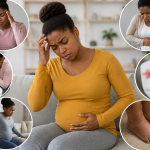
“Sleeping during pregnancy” refers to the pattern, quality, duration, and position of rest a pregnant woman gets from conception to delivery. It is not the same as normal sleep because pregnancy causes major physical, hormonal, and metabolic changes that affect how a woman falls asleep, stays asleep, and feels rested. Good pregnancy sleep means getting 7–9 hours of quality rest per night, without frequent wake-ups, snoring, leg jerks, or breathing pauses. Poor sleep in pregnancy is now recognized by recent studies (2024–2025) as a key health marker linked to high blood pressure, gestational diabetes, preterm labor, and postpartum depression. Understanding sleep in pregnancy helps mothers protect both themselves and their baby.
1. Scientific Reasons Why Sleep Changes Each Trimester
– First Trimester (Weeks 1–13)
- Progesterone surge – This hormone rises fast and acts as a natural sedative, causing daytime sleepiness
- Frequent urination – Blood flow to kidneys increases; uterus presses on bladder slightly.
- Nightmares – Hormonal shifts affect REM sleep, leading to vivid or disturbing dreams.
- Breast tenderness – Makes it hard to lie on stomach.
– Second Trimester (Weeks 14–27)
- Better energy – Progesterone levels stabilize; many women sleep best now.
- Heartburn starts – Growing uterus pushes stomach acid upward when lying down.
- Leg cramps at night – Calcium and magnesium changes; pressure on nerves.
- Nasal congestion – Pregnancy rhinitis (swollen nasal passages) affects 30% of women.
– Third Trimester (Weeks 28–40)
- Physical discomfort – Large belly makes lying hard.
- Shortness of breath lying down – Uterus presses on diaphragm.
- Increased metabolic rate – Body works harder, disrupting deep sleep.
- Restless legs syndrome (RLS) – Iron and dopamine changes; peaks in 3rd trimester.

2. Safe Sleep Positions + Why Left Side is Recommended
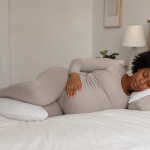
Recommended position: Left side lying (Left Lateral)
Why left side?
– Keeps the inferior vena cava (large vein returning blood to your heart) from being compressed.
– Improves blood flow to the placenta – better oxygen and nutrients for baby.
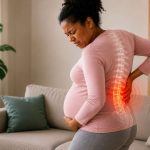
– Reduces back pain and heartburn.
– Lowers risk of stillbirth after 28 weeks.
Other safe positions
– Right side – Acceptable, but slightly less ideal than left.
– Semi-reclined – Lying at 30–45° angle using pillows (good for heartburn or breathlessness).
Unsafe positions
– Flat on back (supine) after 16 weeks – Uterus can compress blood vessels → dizziness, low oxygen to baby.
– On stomach – Impossible after 20 weeks; uncomfortable and presses uterus.

3. Common Sleep Problems
– Insomnia (trouble falling or staying asleep): High cortisol and low melatonin, anxiety about childbirth, nighttime fetal movement peaks at 10pm–2am. Affects 60% of 3rd-trimester women.
– Snoring & sleep apnea: Pregnancy hormones swell nasal passages, weight gain narrows throat. New 2025 study links snoring to gestational hypertension.
– Restless legs syndrome (RLS): Iron deficiency + dopamine imbalance. Common in Nigeria if anemia is untreated. Up to 30% of pregnant women have RLS.
– Frequent urination (nocturia): At night, lying down allows leg fluid to return to kidneys → more urine. Uterus pushes on bladder.

4. Impact of Poor Sleep on Mother + Baby Health
On the mother
– Higher risk of pre-eclampsia (dangerous high blood pressure) – 2024 study showed sleeping 6 hours doubles risk.
– Gestational diabetes – Poor sleep disrupts insulin function.
– Depression & anxiety – Sleep loss affects mood regulation.
– Longer labor – Fatigued uterus contracts less effectively.
– Postpartum depression – Sleep debt in pregnancy predicts PPD.
On the baby
– Intrauterine growth restriction (small baby) – Reduced blood flow from poor maternal sleep position or apnea.
– Preterm birth – Before 37 weeks (2025 meta-analysis: short sleep increases risk by 40%).
– Low Apgar scores – Baby may be less vigorous at birth.
– Higher NICU admission – Breathing problems after birth.
5. Practical Sleep Tips Backed by Studies – Using Things Available in Nigeria
Study-backed tip: How to do it in Nigeria (low-cost)
– Left side with pillow support: Use any foam or cotton pillow (or folded cloth) between knees + one under belly.
– Cool the room before sleep: Open windows from 6–8pm; use hand fan or rechargeable fan.
– Drink early, not late: Finish water by 7pm; drink only sips after 8pm to reduce bathroom trips.
– Iron-rich dinner: Eat beans, egusi, ugu leaf, liver once weekly – reduces restless legs.
– Avoid heavy food 3hrs before bed: Late pounded yam or spicy stew worsens heartburn.
– Magnesium from local foods: Pumpkin seeds (ugbogulu), okra, dark leafy greens – relaxes muscles.
– Nap smart: 30 minutes max, before 3pm, so night sleep not harmed.
– Reduce screen light: Lower phone brightness or use “night mode” 1hr before bed.
– Breathing exercise (Nigerian adapted) Inhale 4 sec, hold 4 sec, exhale 6 sec. Do 5 rounds lying on left side.

6. Red Flag Sleep Symptoms That Need Doctor Attention
Seek immediate help from your antenatal clinic, nurse, or doctor if you have:
– Gasping or choking during sleep – Could be sleep apnea, dangerous for baby.
– Very loud snoring + high blood pressure– Linked to pre-eclampsia.
– Chest pain or palpitations waking you up – Rule out heart strain.
– Leg swelling that doesn’t go down after elevating – Possible pre-eclampsia.
– Severe calf pain (one leg) especially when flexing foot – May be blood clot (DVT).
– Baby moving less after a bad night – Not a direct cause, but monitor fetal kicks.
– Gasping for air when lying flat – Could indicate heart or lung issue.